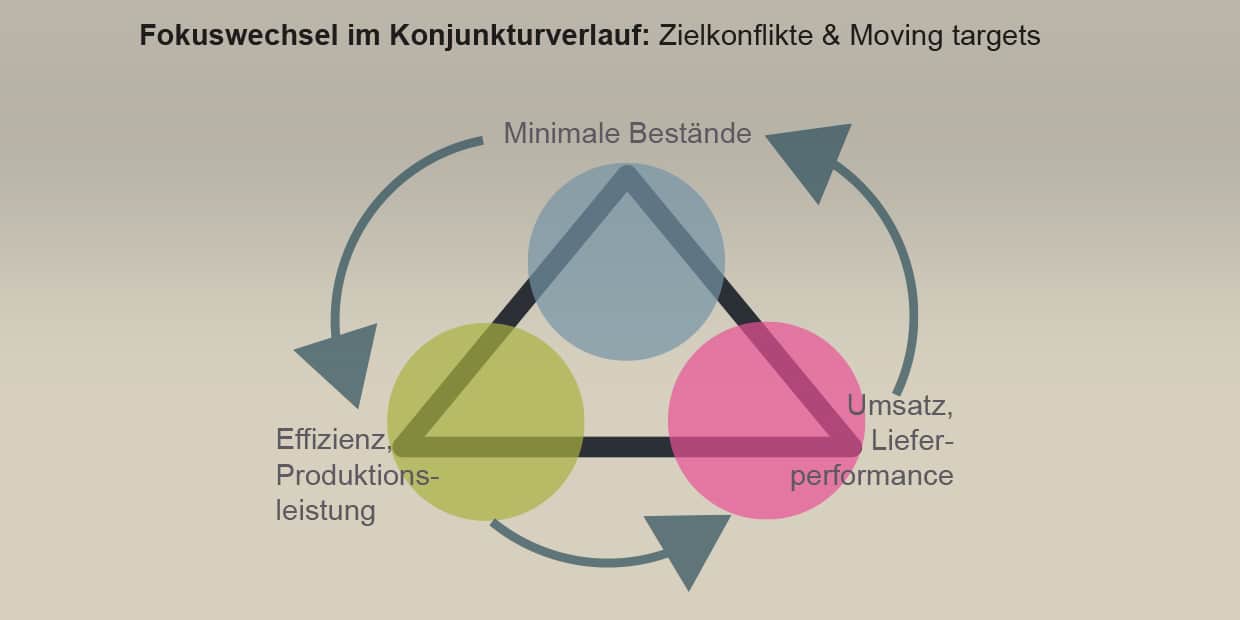
On the face of it, the aim is always maximum revenue with minimum capital tied up and the lowest possible manufacturing cost. But appearances deceive.
Nothing comes in as many variants as reality. If you recognise the shift from one reality to another as early as possible – an economic downturn, say – you can adjust the weighting of these factors towards low inventories. When the economy picks up again, you prioritise higher volume output to maintain delivery capability. In a stable demand situation, delivery performance can be given greater weight.
The right planning strategy for high performance
In some industries – metals production or chemicals, for instance – strongly fluctuating energy prices can make short-term, occasionally even daily adjustment of the planning strategy necessary. At that point the weather forecast becomes an important planning premise.
How do you reach each of these targets through planning?
Meeting even the smallest demand through variants, short lead times and reliable delivery dates.
Reducing inventories to a minimum.
High output through high machine utilisation and optimised changeovers
Each of these directions is legitimate. Unfortunately they partly contradict one another. And as in life, you cannot always have everything at once. Life is and remains a compromise. There is no single, eternally valid planning strategy – thankfully, because otherwise the discipline would be less demanding. Staying current is what makes it interesting.
Analysing production data and building new models
Adapting long- and short-term planning flexibly to current conditions will become a decisive field of action for most companies.
That requires analysis of existing production data and new models that combine past experience with forecasts for the relevant parameters.
The most important aspect of such flexible production planning is that everyone involved shares the same understanding of which priorities currently apply. The second is implementing them in the respective planning systems.
We specialise in balancing these conflicting goals, defining the right operating points and taking everyone in the plant along with us.