
Illustration: satellite, rocket, aircraft and shield as a symbol of the aerospace industry

Challenges in the aerospace industry

Here efficiency has to be combined with the utmost precision, because the aerospace industry is shaped by:

  • Extremely high quality requirements
  • Complex supply chains
  • Long development and production cycles
  • Strict regulatory requirements
  • A wide range of variants

Operational excellence in a highly regulated and demanding industry.

Typical operational challenges

Many aerospace companies face similar problems, and they act directly on delivery capability and performance.

  • Unstable supply chains
  • Long lead times in production
  • Bottlenecks in critical components
  • High costs caused by complexity
  • No end-to-end transparency

Our approach: operational excellence in complex systems

We combine production, supply chain and transformation expertise into one integrated approach. The aim is to make complex systems stable, efficient and scalable.

  • Stability in highly complex environments
  • End-to-end optimisation
  • Measurable operational results

Concrete topics

Optimising production processes in aviation

We improve efficiency and stability in complex manufacturing environments.

Measures

  • Bottleneck analysis
  • Process stabilisation
  • Lead time optimisation

Stabilising the supply chain in the aerospace industry

Supply chains in aviation are highly sensitive and complex.

Measures

  • Supplier management
  • Risk reduction
  • Transparency along the chain

Operations excellence

We improve operational performance along the entire value chain.

Measures

  • KPI systems
  • Performance management
  • Lean optimisation

Transformation in the aviation industry

We guide change processes in complex organisations.

Measures

  • Organisational development
  • Digitalisation
  • Process harmonisation

How we work in aerospace projects

Our projects follow a structured approach. We work closely with the operational teams and with management throughout.

Step 1

Analysis

We map the end-to-end value stream.

Step 2

Bottlenecks

We identify the critical bottlenecks.

Step 3

Measures

We develop concrete operational measures.

Step 4

Implementation

We implement while operations continue.

Step 5

Stabilisation

We lock in the effect and scale it up.

Typical project situations

Two constellations we meet regularly in aerospace supply – and how we approach them.

Maintenance optimisation in aerospace production

Starting point

Recurring machine downtime and unplanned maintenance lead to delivery delays and high maintenance costs. Structured maintenance plans and transparency about critical assets are missing.

Approach

We introduce a preventive maintenance system: clear maintenance cycles, prioritisation of critical assets and digital recording of faults.

On-the-job training to stabilise production

Starting point

Quality problems and high error rates, because new staff are not sufficiently trained and standards are not applied consistently.

Approach

We build structured on-the-job training: standardised work instructions, qualification matrices and coaching directly on the shopfloor.

Typical results of our projects

The aim is always a measurable operational improvement.

  • More reliable supply chains
  • Shorter lead times
  • Higher operational efficiency
  • Better transparency
  • Lower costs despite complexity

Aerospace at the core of our industry expertise

We work with companies along the entire aerospace value chain and know the specific requirements of the industry.

  • Suppliers
  • System providers
  • Production sites

Frequently asked questions

Typical consulting topics in the aerospace industry are production optimisation, supply chain management, quality management (EN 9100, for example), maintenance and MRO, and efficiency gains in complex manufacturing processes.
Consultancies for airlines support topics such as cost reduction, fleet strategy, maintenance optimisation (MRO), operational efficiency and turnaround programmes.
Consulting pays off above all with operational problems such as delivery delays, rising costs or quality deviations – and when transformations are due: growth, restructuring or digitalisation.
What matters is demonstrable project experience in the aerospace or airline environment, the ability to see implementation through, and knowledge of regulatory requirements and quality standards.
External consulting brings best practices, fast implementation and additional resources to address complex challenges such as efficiency gains, crisis management or growth.
For a COO, the relevant consulting focuses on operational excellence, cost reduction, stable supply chains and scalable processes. The aim is to improve overall performance – from production or flight operations through planning to implementation.
For a head of maintenance, the decisive topics are maintenance optimisation, MRO processes, asset availability and preventive maintenance. The focus is on less downtime, higher reliability and efficient maintenance strategies.

Let’s improve performance together

In a first conversation we look at your situation and point out concrete levers.
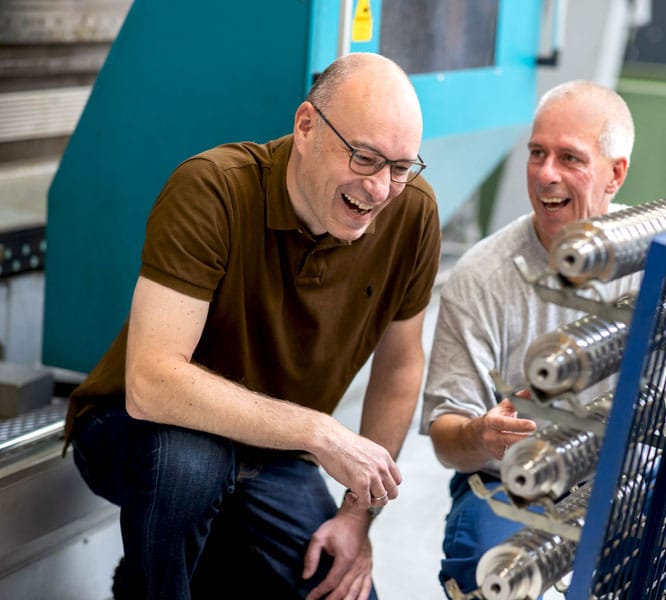
André Rambau, managing partner at pareto

André Rambau

Managing partner